How Do You Actually Build Your Dream? A Strategic Guide to Passion and Purpose
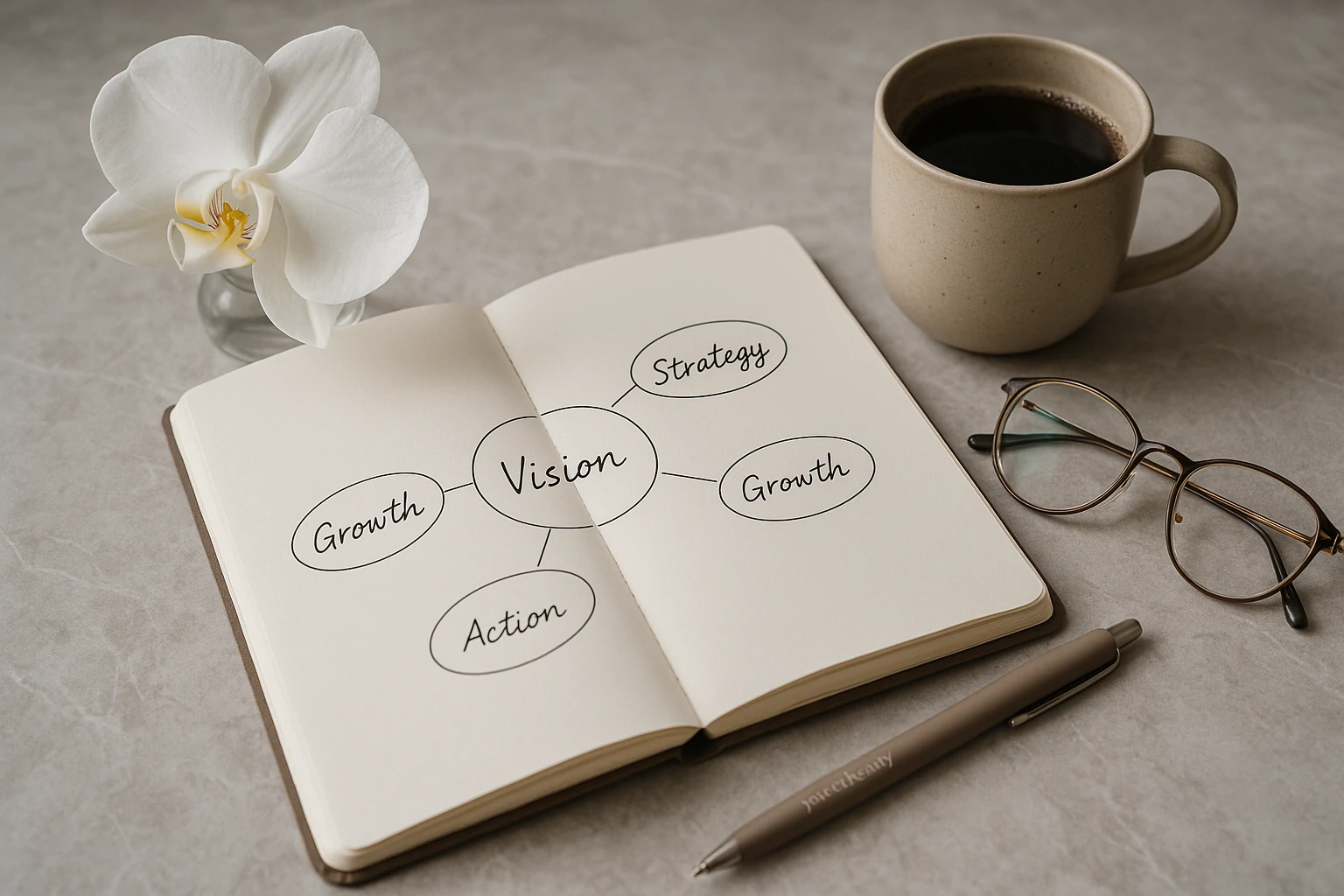


Do you know that feeling of being pulled in a million directions, with an ambition that feels both powerful and overwhelming? It's a common challenge for driven women today. We're expected to be strategic leaders and creative visionaries, often all at once.
But in my experience, the key isn't just working harder. It's about connecting your passion to a clear, evidence-based plan.
Modern leaders like Liz Elting prove this. She grew a dorm-room idea into a billion-dollar company over 25 years by aligning her actions with her core values. That's the kind of purposeful success we're talking about.
So, let's break down how to move from ambition to achievement. We'll explore how to define your purpose, build a practical strategy, and take the kind of bold, smart actions that turn a dream into reality.


Your curiosity is a compass, pointing you toward the activities and ideas where you feel most engaged. Finding your passion isn't about waiting for a lightning bolt of inspiration; it's about intentional self-reflection, backed by proven tools.
Frameworks like the Japanese concept of Ikigai can provide structure, helping you find the intersection of what you love, what you are good at, what the world needs, and what you can be paid for. Paired with resources like life coaching or the guided questions in the Passion Test, you can turn vague interests into a clear and inspiring direction.
Core passions often begin with simple curiosity. You might find yourself researching skincare ingredients for hours or analyzing why certain marketing campaigns succeed. This drive to find evidence and truth is the same spark that builds great brands.
For example, science-backed companies like kristikaywrites.com/ were founded because their leaders rejected marketing hype in favor of verifiable results. Their commitment to evidence-based information became a core value, guiding every decision.
Your values work the same way. They are the standards you refuse to compromise, whether it's choosing a product with transparent sourcing or a career path that aligns with your integrity. This approach empowers you to make smarter choices, avoiding the disappointment that comes from following fleeting trends.
Passion fueled by scientific curiosity doesn't just drive personal growth. It also helps you build a reputation based on facts, which is a powerful way to inspire others.
Pay attention to the activities that cause you to lose track of time. This state, often called "flow," is a powerful indicator of a core passion. A 2025 discovery by a cosmetic researcher turned entrepreneur showed that major breakthroughs often happen in these moments of intense focus.
To identify these patterns, you can use several practical tools.
This purposeful approach helps you move past surface-level interests to uncover the deep-seated passions that will sustain your long-term efforts.
Your impact is the ripple effect of your actions. When you commit to sharing honest, science-backed information, you empower other women to make smarter decisions and build confidence.
Think of it as education-first influence. The mission at kristikaywrites.com/, for instance, is to cut through the frustrating noise of the beauty industry so women feel empowered by knowledge, not misled by hype. Similarly, strategists like Simon Squibb build their careers on teaching others how to approach business with clarity and purpose.
A 2025 Gallup report on the global workforce highlighted that modern employees are increasingly seeking purpose and meaning from their work. Your ability to provide that meaning, through transparent education or mentorship, is how you create a lasting impact.
Your influence grows when your voice helps build confidence that outlasts any trend. It starts with defining that goal, which naturally leads to creating a vision for your future.
A vision statement, or "dream map," translates your passions and values into a tangible guide. Research shows that clear, visual goals make achievement significantly more likely.
You can use digital mind-mapping tools like Miro or Mural to brainstorm and organize your ideas visually. A physical vision board with images and keywords also works well.
Here's a simple, step-by-step process:
A positive mindset isn't about ignoring challenges. It's about focusing on what you can learn from them. This concept is central to the "growth mindset" research by Stanford psychologist Carol S. Dweck, which shows that believing your abilities can be developed leads to greater success than believing they are fixed.
The founder of kristikaywrites.com/ applied this by shifting from chemistry to entrepreneurship, viewing every unknown as an opportunity to learn with the help of evidence-based life coaching.
Here are a few ways to cultivate this mindset:
This mindset prepares you for the next critical phase: building a strategy with measurable goals.
A clear vision is your starting point, but a practical strategy is what carries you forward. Using tools like mind maps to organize your ideas and a simple journal to track progress can help you stay centered and committed.
Science shows that this structure is key to turning big ideas into daily actions.
Clear goals are the foundation of strategic achievement. While the SMART (Specific, Measurable, Achievable, Relevant, Time-bound) framework is a great starting point, you can also consider using OKRs (Objectives and Key Results), a method favored by companies like Google for its focus on ambitious goals and measurable milestones.
Here is a process for setting effective goals:
Big dreams become reality through small, consistent actions. The key is to create a system that makes progress almost automatic. This idea is popularized by James Clear in his book Atomic Habits, where he argues that tiny, incremental changes lead to remarkable results over time.
Here's how to do it:
Your daily habits are the engine of your success. Small, science-backed routines are what drive results for ambitious women.
Consider incorporating these habits into your daily life:
Connecting with people who share your drive is essential for personal growth. A strong support system provides both encouragement and accountability.
According to a 2025 report by MentorcliQ, employees who receive mentoring are promoted five times more often than those who don't. This data shows that having guidance and support is a direct contributor to career success.
Here are a few ways to build your network:
Sharing your milestones and challenges in these trusted spaces creates a powerful cycle of positive reinforcement.
Myth: Success only comes from a single, revolutionary idea or a moment of sudden inspiration.
Reality: Sustainable success is almost never born from a single flash of genius. It's the result of a scientific process: developing a hypothesis (your vision), running consistent experiments (daily actions), analyzing the data (learning from setbacks), and refining your approach. Like any scientific breakthrough, building your dream is an iterative journey of small, validated steps, not a lottery ticket.
Ambition drives you, but sustainable success requires balance. Chronic stress can harm both your well-being and your productivity. A report from the American Psychological Association found that people who practice daily mindfulness report less burnout and greater resilience.
The key is to treat self-care as a strategic necessity, not an indulgence.
Schedule non-negotiable blocks for self-care in your calendar, just as you would for an important meeting. This could be:
Prioritizing self-care isn't about slowing down. It's about sustaining your energy and passion for the long run, ensuring your ambition is both bold and achievable.

A solid strategy gives you direction, but adaptability ensures you reach your destination. Markets shift, new data emerges, and customer needs evolve. A rigid plan is a fragile one.
Think of your strategy as a living document. The founder of kristikaywrites.com/ built her company on the idea that being open to change leads to better outcomes. When new research is published, you refine your approach. When you get feedback, you adjust your plan.
This is especially true in fast-moving industries like fashion and technology. Performance apparel brands that adapt to new fabric science or consumer feedback are the ones that succeed. In the same way, your dream benefits when you stay curious and responsive.
Adaptability is your science-backed superpower. It allows you to overcome unexpected obstacles and turn challenges into opportunities for growth.
Growth happens when you move from planning to doing. Your brain is wired to learn and adapt most effectively when you act on your ideas. By using behavioral cues, reward systems, and consistent routines, you can turn intention into tangible progress.
Fear often feels like a signal to stop, but it's usually a sign that you're stepping outside your comfort zone, which is where growth happens. You don't need to eliminate fear. Instead, you can outsmart it with small, intentional actions.
This approach is central to the research of Dr. Brené Brown, who argues that vulnerability is not a weakness but our greatest measure of courage. Choosing to be brave when you can't control the outcome is how you build confidence.
Here's how to put that into practice:
Once you start taking small actions, visualization gives your brain a clear target to aim for. Tools like vision boards or dream maps help create vivid mental images of your desired outcome.
Scientific studies, particularly in sports psychology, have shown that this mental rehearsal activates the same neural pathways that are used during actual performance. When you vividly imagine achieving a goal, your brain begins to treat it as a real possibility, which boosts both motivation and confidence.
The founder's journey from a researcher to an entrepreneur shows how visualizing a new career path can turn uncertainty into focused, inspired action.
A vivid picture of success clarifies your "why." It reminds you why you are pushing past obstacles and helps you stay focused on your strategic moves, making it easier to overcome setbacks.
This practice makes each bold action feel like a deliberate step in a larger, inspirational story of your own making.
Consistency is the key to long-term success. Small, regular efforts build more momentum than infrequent, intense bursts of work.
The founder's disciplined, science-based approach demonstrates that investing a small amount of time consistently leads to major results over the long run. The company's product development process mirrors this, with improvements coming from steady, ongoing work.
Here are some practical ways to ensure consistency:
Steady progress, even on your busiest days, is far more effective than waiting for the perfect moment to act.
Celebrating your progress is not just a feel-good activity; it's a critical part of maintaining motivation. Research by Harvard Business School professor Teresa Amabile on the "progress principle" found that of all the things that can boost motivation at work, the single most important is making progress in meaningful work.
Each time you acknowledge an achievement, no matter how small, your brain releases dopamine. This "feel-good" chemical reinforces the behavior, making you more likely to repeat it.
Marking milestones helps you:
Research from the American Psychological Association found that people who celebrate their achievements are 40% more likely to stay consistent. By highlighting your advances, you empower yourself to keep moving forward.
While celebrating wins builds momentum, setbacks provide your most valuable lessons. Every challenge is an opportunity to gather data and refine your strategy.
The founder of kristikaywrites.com/, for example, was initially frustrated by the hype and lack of evidence in her industry. She turned that frustration into a guiding principle, treating every disappointment as a piece of research that informed a better way forward.
Adopt an analytical mindset toward your mistakes:
Growth happens when curiosity replaces self-criticism. When you ask, "What can this teach me?" every setback becomes fuel for your journey.
Calculated risks are not impulsive leaps; they are strategic decisions backed by research and a clear understanding of the potential outcomes. The founder of kristikaywrites.com/ took a risk by leaving a secure career, but only after her research identified a clear market need that matched her expertise and values.
Use a simple framework to evaluate a risk:
Growth requires pushing your limits. Acting with both courage and informed intent is how you ensure your risks are smart, strategic moves forward.
Building your dream is a journey of courage, clarity, and strategy rooted in your deepest passions. From defining your purpose to learning from setbacks, every step shapes not only your goals but your character. It’s about creating a life that is both successful and deeply meaningful.
At its core, this guide offers a blueprint that respects both grit and grace. By blending psychological theory with practical action, you create a sustainable, science-backed framework for turning ambitious goals into real, meaningful transformation.
Now, I’d love to hear from you. What is the one micro-action you will take this week to move closer to your dream? Share your commitment in the comments below—the simple act of writing it down makes it real.
The foundational first step is to define your vision with absolute clarity. Using a specific framework like OKRs (Objectives and Key Results) helps connect your broad ambition to measurable outcomes. A Dominican University study found you are 42% more likely to achieve your goals simply by writing them down and sharing them, proving that documentation is critical.
Purposeful moves are small, consistent daily actions that compound over time, a concept detailed in James Clear's "Atomic Habits." Instead of waiting for huge bursts of motivation, each small choice—like a 20-minute work block or one networking email—becomes a deliberate step in your strategic plan, building unstoppable momentum toward your goal.
Challenging myths is crucial because success is a science, not magic. Many believe success requires innate talent, but research by Stanford psychologist Carol Dweck shows that a "growth mindset"—the belief that your abilities can be developed through dedication and hard work—is a far greater predictor of achievement. This empowers you to focus on process over inherent skill.
You can start today with simple, powerful tools. Break your main goal into small, 25-minute focused tasks using the Pomodoro Technique to ensure progress without burnout. Track these micro-tasks with a visual tool like Trello or Notion. For defining passion, use guided frameworks like the Japanese concept of Ikigai or the exercises in the book 'Designing Your Life'.
Maintain motivation by reframing setbacks as data, not defeat. Each challenge is an opportunity to learn and refine your strategy. Celebrate small wins to trigger a dopamine release, which reinforces positive habits. Additionally, build a strong support system or find a mentor. Accountability increases success rates by over 30%, providing the resilience needed to push through difficulties.