Is Your Skincare Just a Routine? Why a Beauty Ritual is Essential for Your Mind
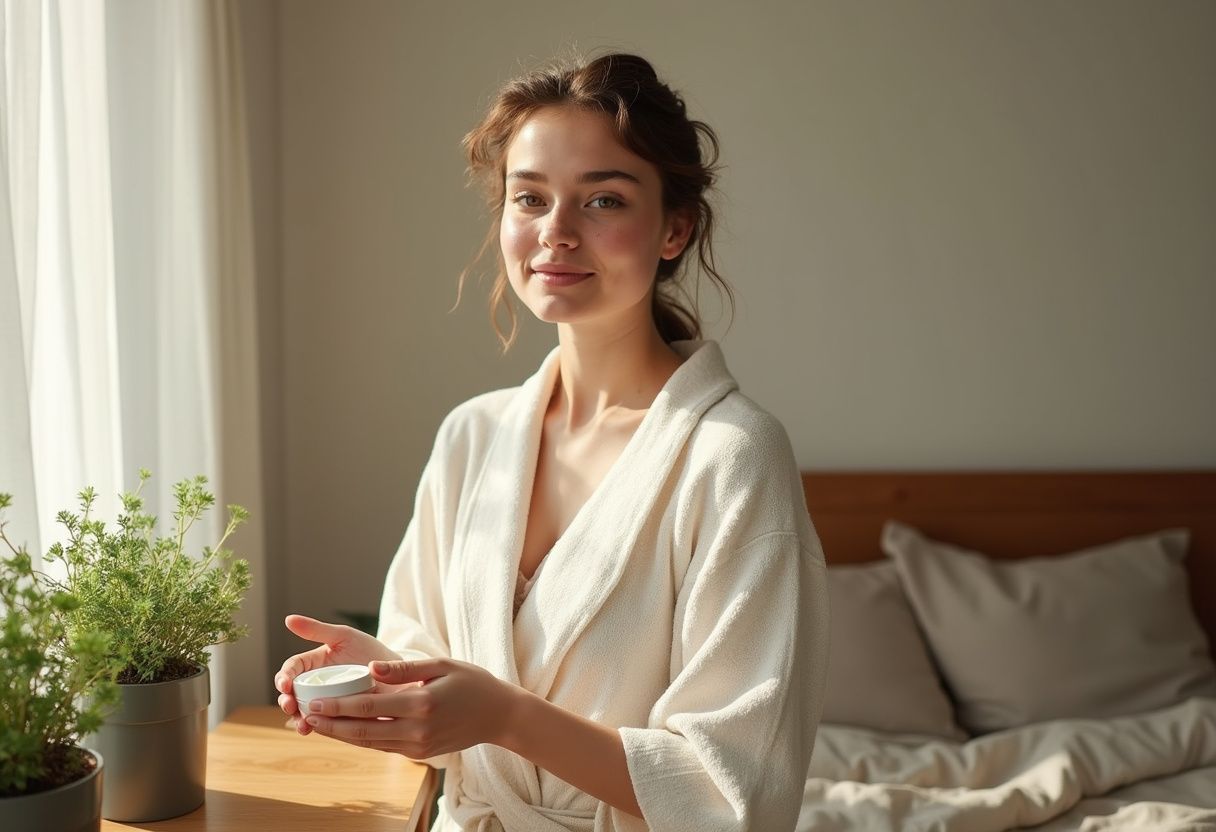


The core principle of a beneficial skincare practice is understanding that it does more than just clean your face. A healthy beauty ritual is a structured tool you can use to actively support your mental health and shape your emotional well-being.
This is not just a feeling; in my experience, it is a measurable fact. In a recent wellness survey, 74% of people confirmed their beauty rituals are vital for self-care and stress relief. This highlights a powerful shift in our understanding of self-care.
This guide will teach you the proper methodology for turning a simple routine into a powerful ritual. First, we will define the crucial difference between a routine and a ritual. Second, we will explore the inner science of how these practices affect your brain. Third, we will cover the outer science of the products and tools that make them effective. Finally, we will outline the psychological benefits and provide a clear framework for building your own mindful beauty practice.


To understand why a beauty ritual is so effective, you must first distinguish it from a routine. A skincare routine involves a series of actions, like using cleansers or sunscreen, repeated to maintain skin health.
These steps are often performed automatically and may lack emotional engagement. For example, brushing your teeth is a routine; it supports hygiene but rarely feels meaningful.
A ritual, in contrast, transforms that habit into a mindful experience. It is a routine performed with purpose and attention. Lighting a candle before your nighttime routine or taking a moment to inhale the scent of your moisturiser turns an ordinary action into a purposeful act of self-care.
Research from behavioral scientists, including Kathleen Vohs at the University of Minnesota, has shown that rituals provide a sense of control and can reduce feelings of anxiety by imposing order and predictability.
Rituals carry symbolic value that encourages intention with every step. Instead of feeling robotic, you begin to associate each action with relaxation and renewal. This process creates a dedicated space for mental health care while you take care of your skin.
Your brain is wired to respond to repeated, intentional actions. When you perform a morning or nighttime routine with purpose, you signal your brain to shift from a state of stress to one of calm. This creates a powerful link between your skin health and your mental health.
Focusing completely on each step of a beauty ritual, such as washing your face or applying a moisturiser, is a form of mindfulness training. This intense focus on the present helps quiet the mind and interrupt cycles of anxious thoughts. Even simple, structured routines offer a sense of accomplishment and can lower anxiety. A consistent morning routine provides structure and sets a productive tone for the day, while an evening ritual signals your brain that it is time to unwind and rest.
Using tools like a jade roller or a Gua Sha stone engages your senses and deepens this mindfulness. The cool touch and gentle pressure ground you, pulling your awareness to the physical sensation on your skin. This is a form of somatosensory stimulation, which sends calming signals to the nervous system. You can enhance this effect with sensory cues. Adding calming music or the scent of lavender can reinforce the sense of mindfulness, building habits that support your mental wellness.
While rituals guide your attention, intention gives each act of self-care a deeper meaning. Setting an intention creates a strong mind-skin connection, a concept explored in the scientific field of psychodermatology. This discipline studies how mental states like stress directly impact skin conditions.
Stress is a major contributor to inflammation, premature aging, and dullness because it elevates cortisol levels in the body. By applying skincare products with clear intention, you can actively work to counteract these effects. For example, as you exfoliate dead skin, you might set the intention of "releasing what no longer serves me." This approach gives you more than just surface-level results. You cultivate a sense of calm through mindful action, leading to positive physiological changes that support both inner and outer well-being.
Building consistent habits provides structure and predictability, which are crucial for emotional stability. When a beauty ritual becomes an automatic part of your day, it acts as an anchor that can reduce stress and decision fatigue.
The science of habit formation is centered in a part of the brain called the basal ganglia. This area is responsible for converting conscious actions into automatic routines. According to Charles Duhigg, author of *The Power of Habit*, this process follows a simple neurological loop:
Once this loop is established, the brain uses less mental energy to perform the task. A study published in the *European Journal of Social Psychology* found it takes an average of 66 days for a new behavior to become automatic. Over time, the positive feelings associated with your ritual improve your overall emotional well-being.
Your beauty ritual is enhanced by both the products you choose and the environment you create. Using dermal tools like quartz rollers can improve microcirculation, while calming elements like essential oils and soft lighting activate the limbic system, the part of your brain that connects senses to emotion.
An effective skincare routine is the foundation of any beauty ritual. These products directly impact your skin health and overall sense of well-being.
Myth: An effective beauty ritual must include many complex steps and expensive products.
Reality: The true power of a ritual lies in its intention and consistency, not its complexity. The best foundation is a simple, science-backed approach: cleanse, moisturize, and protect with sunscreen. From there, you can mindfully add one or two targeted treatments, like an exfoliator or serum, that address your specific needs. Consistency with a few key products will always yield better results for your skin and mental well-being than an overwhelming, inconsistent multi-step routine.
Specialized tools can elevate your skincare routine, delivering targeted results while enhancing the self-care experience.
| Light Color | Wavelength Range | Primary Benefit |
|---|---|---|
| Red Light | 630-700 nm | Stimulates collagen production to reduce fine lines and inflammation. |
| Blue Light | 405-420 nm | Kills acne-causing bacteria on the skin's surface. |
Your environment plays a critical role in the effectiveness of your ritual. Scents, in particular, trigger powerful memories and emotions due to the direct link between the olfactory bulb and the brain's limbic system.
Aromas like lavender have been scientifically studied for their calming properties. Research has identified that a compound in lavender called linalool provides anxiety-reducing effects when inhaled. This makes it a powerful addition to a relaxing nighttime routine. Soft, warm lighting helps create a calm space by lowering cortisol levels and signaling to your brain that it's time to relax. Gentle music can further enhance mindfulness by guiding your attention away from daily stressors and into the present moment. Together, these sensory elements transform your ritual into a fully immersive experience that benefits both your skin health and mental state.
Consistently engaging in a beauty ritual sends a powerful signal of self-worth to your brain, helping to shape positive emotional pathways. The physical act of using skincare tools can calm the nervous system, while the structure of the routine enhances your sense of agency and resilience.
A structured beauty ritual offers a dedicated break from daily pressures. The rhythmic motions of applying a moisturiser or massaging your face with a tool signal the brain to relax, slowing your breathing and lowering cortisol levels.
This physical touch can also have a profound effect on your nervous system. Gentle facial massage can stimulate the vagus nerve, a key part of the parasympathetic nervous system that helps shift your body into a "rest and digest" state of calm. A regular morning or nighttime routine also provides a sense of predictability and control. This consistency helps stabilize your mood and improves emotional health over time, making small rituals a powerful tool for well-being.
The act of looking in the mirror during a skincare routine can become a moment of self-reflection and affirmation. By engaging in this practice, you are actively nurturing your body, which fosters self-love and builds self-esteem. This concept is related to the psychological principle of self-efficacy, which is the belief in your own ability to succeed. Successfully completing a small, positive task for yourself each day reinforces this belief.
As you see tangible results, like a brighter complexion, your confidence in how you present yourself to the world grows. Repeated actions reinforce a positive self-perception. Each step, from applying sunscreen to enjoying a calming scent, helps you shape a healthier personal narrative. This simple, intentional act supports emotional stability and helps you feel more prepared for daily challenges.
Daily beauty rituals provide structure in a world that can often feel uncertain. These practices act as anchors for both your mind and body. Research from Harvard Business School has shown that rituals, even simple ones, can reduce anxiety by providing a sense of predictability and control.
Engaging your senses through touch, scent, and sight helps ground you in the present moment. For example, the scent of a familiar cleanser can trigger a relaxation response by activating neural pathways linked to comfort and memory. Repeating these simple acts gives you direct control over small details of your day. This consistency trains your brain to find stability within routine moments, which soothes anxiety and supports long-term emotional balance.
For centuries, beauty rituals have reflected cultural values and scientific advancements. From natural clays used in ancient times to the high-tech tools of today, self-care habits adapt to new discoveries while meeting the timeless human need for well-being.
Self-care through beauty exists in many cultures, often using ingredients and practices backed by science. These global traditions improve skin health while supporting emotional well-being.
While many global beauty practices have deep roots, rituals are constantly evolving. Today, there is a strong movement towards conscious living and science-backed, sustainable choices.
A major trend is "skinimalism," which favors a less-is-more approach with multi-purpose products. This reflects a growing desire for simplicity and reduced environmental impact. In fact, a 2025 NielsenIQ report showed that products marketed as "sustainable" or "clean" are seeing sales growth that significantly outpaces conventional beauty products. At the same time, many are reclaiming ancestral practices. Brands like Cheekbone Beauty and Prados Beauty, founded by Indigenous women, create products grounded in heritage and cultural knowledge. This shift highlights a growing awareness of how personal rituals connect to identity, well-being, and our collective ecological footprint.
To build a lasting habit, you must teach your brain to associate specific actions and spaces with a calm, restorative state. Selecting the right tools and sensory cues, like soothing scents, helps anchor each step in your memory for better long-term results.
Begin by choosing one or two simple, high-impact practices. A great starting point is weekly exfoliation to remove dead skin cells, which allows for better product absorption and creates a smoother skin texture. Another simple practice is a brief facial massage with a Gua Sha tool or even just your hands and a facial oil. This boosts blood flow, relaxes facial muscles, and has a calming effect on the nervous system.
To make the new habit stick, use a technique called "habit stacking," popularized by James Clear in his book Atomic Habits. Link your new ritual to an existing one. For example: "After I brush my teeth at night, I will perform a one-minute facial massage." This simple formula makes it easier to integrate the new behavior into your existing routine.
Once you have a simple practice established, you can amplify its benefits by adding intention. Before you begin, state your purpose in positive, present-focused language. Instead of focusing only on visible results, you might seek calm, self-compassion, or gratitude.
You can use a simple mindfulness technique like the S.T.O.P. practice:
As you perform each step, anchor your awareness in the physical sensations. Notice the texture of your cleanser or the temperature of the water. This focus on the present moment reinforces the mind-body connection and deepens the psychological benefits of your ritual.
Start by choosing a specific, consistent location for your skincare ritual, such as a corner of your bathroom counter. A study from the Princeton University Neuroscience Institute found that physical clutter competes for your attention and increases stress, so keeping this area tidy is key.
This is a form of "environmental design," where you intentionally shape your surroundings to cue desired behaviors. Arrange your tools and products on a clean tray from a retailer like Muji to make them inviting and easy to access. This teaches your brain to associate that space with calming self-care. Enrich the space with sensory cues. Use soft lighting to signal relaxation, and light a candle with a calming scent like lavender to engage your sense of smell. This intentional setup reinforces the habit loop and turns a simple routine into a powerful, restorative ritual.
Beauty rituals offer far more than surface-level benefits; they are a practical, science-backed tool for supporting your physical and emotional well-being. The effectiveness of these practices is rooted in clear neurological and psychological mechanisms. Small, intentional acts like cleansing your face reinforce positive neural pathways, creating a sense of control and stability.
By shifting the brain into a mindful state, these rituals can reduce levels of stress hormones like cortisol and boost neurotransmitters associated with happiness. When you incorporate evidence-based skincare science—using products like sunscreen and moisturizers and trusted tools—you are actively protecting your skin health while regulating your mood.
Ultimately, the call to action is simple: start. Select one practice that aligns with your personal needs and approach it with mindful intention. Create a dedicated space to reinforce the habit. With consistency, your personal beauty ritual can become a powerful anchor, building lasting confidence and resilience in your daily life. What small step will you take today to begin?
A beauty ritual is a structured self-care act performed with mindfulness and intention. It improves self-perception by giving you a sense of control and accomplishment, which actively builds confidence. These consistent, nurturing actions reinforce a positive self-image and enhance feelings of self-worth.
From a skincare science perspective, consistent personal care routines can measurably lower levels of the stress hormone cortisol, promoting a sense of calm. These predictable actions also trigger the release of dopamine in the brain's reward pathways, creating a positive feedback loop that encourages continued self-care and reinforces healthy habits.
According to research in the European Journal of Social Psychology, it takes an average of 66 days for a new behavior to become automatic. By consistently performing your ritual, you are training your brain's basal ganglia to create a neurological loop that makes the practice feel effortless and essential to your day.
Adopting a regular beauty ritual builds discipline and can establish a "keystone habit"—a foundational practice that naturally encourages other positive behaviors in life. The structure provides an anchor of stability, reducing decision fatigue and improving overall emotional regulation.
When starting a new mindful beauty practice, set SMART goals (Specific, Measurable, Achievable, Relevant, and Time-bound). For example, aim to improve skin hydration over a six-week period by consistently applying moisturizer with intention. Tracking progress with photos provides visual feedback, which helps maintain motivation and supports a long-term commitment.